

Here’s a thought experiment. Imagine you were asked to design the most equitable writing tool possible, from scratch, with no financial stake in the outcome. No vendor contract. No licensing renewal. No dashboard to sell to the district. One job: build something that works for every kid in the room.
It would have to work for the student with an IEP and the new English speaker who arrived three weeks ago. For the kid with no home wifi and the kid whose device has a cracked screen and a battery that gives out by third period. For the kid who is grieving and cannot face one more login screen today.
It couldn’t care about bandwidth. It couldn’t require a password. It couldn’t go down during a state assessment window, and it couldn’t need a charger. It would have to open on a bus, in bed, at a grandmother’s kitchen table.
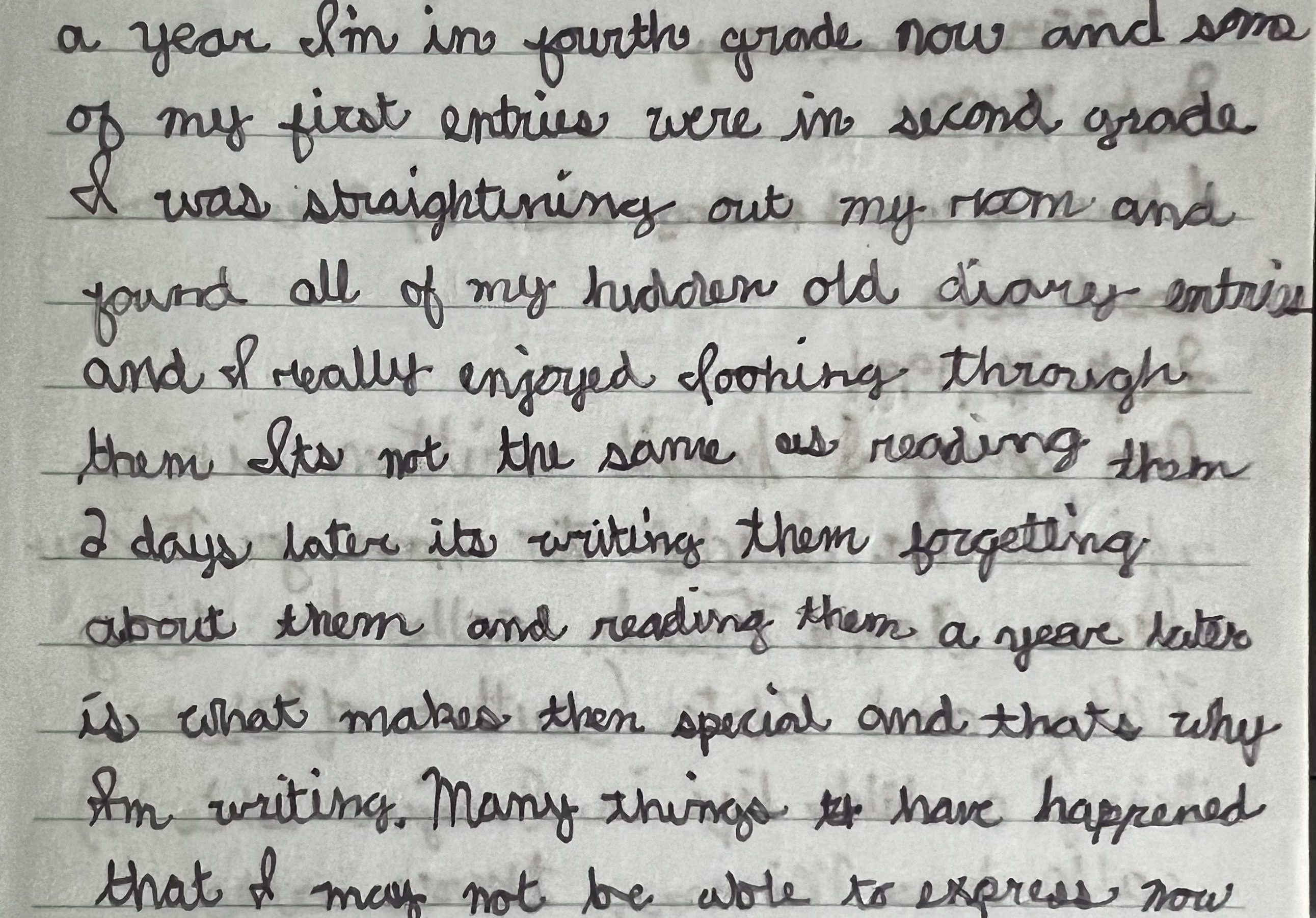
Keep designing, and you arrive somewhere a little embarrassing. You’d invent the notebook.
Then you’d notice we already have one. And we’re steadily replacing it.
Friction is never distributed evenly
Devices come to us wrapped in the language of access. Every kid gets one; therefore every kid has the same tool. But a tool is only as equal as the conditions it needs to work, and devices need a lot of conditions: a charge, a connection, a working login, an update that didn’t break something overnight, an adult at home who can troubleshoot a sync error.
For some kids, a dead battery or a frozen document is a minor annoyance. For others, it’s a wall. And over a semester, those walls quietly sort kids. Not by ability. By access to the conditions that let ability show up.
A notebook doesn’t sort. It works identically for every kid in the room. Same paper, same pen, same blank page, whether you have an IEP, whether English is your third language, whether the wifi at home went out in August and hasn’t come back.
So who benefits from the replacement?
Ask that question in a planning meeting and watch the conversation get more honest. If the notebook already does the equity work we say we want, then replacing it has to be serving something else: data collection, platform adoption, adult convenience, a line item someone already committed to.
None of those are villains. But it’s worth noticing that the benefits of the switch rarely land on the kids the equity language is written about.
This isn’t nostalgia
The notebook argument gets waved off as sentimental, the pining of teachers who miss the smell of composition books. I understand why. But the equity case for the notebook is structural, not sentimental. It rests on properties of the object itself: it needs nothing, it fails no one, and it belongs to the kid holding it.
If you were designing equity on purpose, you would invent this exact object. We don’t have to invent it. We just have to stop quietly throwing it away.
Leave a Reply